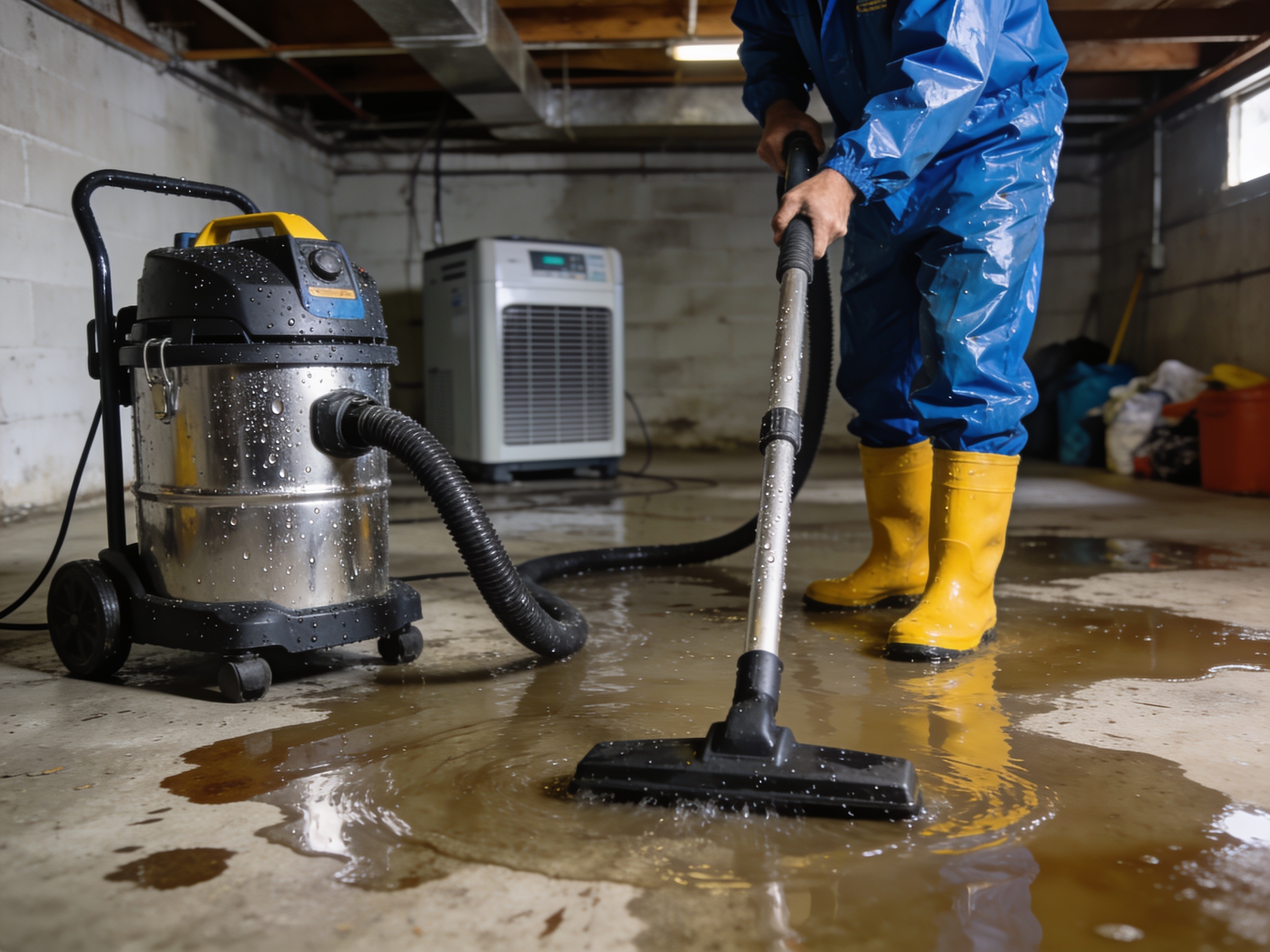
Chesapeake's humid subtropical summers keep relative humidity high even after the rain stops, so water left in crawl spaces or behind baseboards in older Great Bridge and South Norfolk homes quickly turns into hidden mold growth. Crews start with truck-mounted extraction units that pull standing water from concrete slabs common in Western Branch properties built in the 1970s, then move to air movers and dehumidifiers sized for the square footage. Without this first step, moisture migrates into the Dismal Swamp Canal watershed soils and reappears weeks later through slab cracks.
Storm surges and nor'easters push water into Greenbrier and Deep Creek neighborhoods faster than city storm drains can handle, especially where yards slope toward foundations. Technicians use moisture meters on drywall and subfloors to map the full extent before cutting and removing saturated material, preventing the need for larger rebuilds later. In these older stock homes, lath-and-plaster walls hold water differently than modern drywall, requiring slower, targeted drying to avoid cracking.
Nearby Norfolk and Virginia Beach jobs often involve saltwater intrusion from tidal flooding, but Chesapeake City properties more commonly see freshwater from roof leaks or appliance failures that still demand the same rapid removal to protect hardwood floors and cabinetry. Leaving even a quarter-inch of water under vinyl or carpet padding creates long-term cupping and odor issues once the hot, humid air returns.
Technician insight
In Chesapeake, the thing that catches most people out with Emergency Water Removal is how the high water table around Deep Creek and near the Dismal Swamp Canal keeps moisture in older slab and crawl-space homes long after visible water is gone, especially during humid summers when drying times stretch.
Greenbrier Pipe Burst
A supply line failed overnight in a 1980s Greenbrier ranch, sending water under the living-room slab and into the adjacent hallway. Extraction units pulled several hundred gallons before it reached the HVAC closet, then drying equipment ran for three days to bring wall cavities back to acceptable readings. The homeowner avoided full floor replacement once hidden moisture was mapped and addressed.
Emergency Water Removal Services We Offer
✓Basement Water Extraction
Removes standing water from below-grade spaces common in Great Bridge and Deep Creek homes before it reaches electrical systems or HVAC equipment.
✓Crawl Space Flood Removal
Extracts water from dirt or encapsulated crawl spaces typical in South Norfolk and Western Branch properties where high water tables keep moisture trapped.
✓Storm Surge Cleanup
Handles rapid removal after heavy rains or tropical systems that overwhelm drainage near the Dismal Swamp Canal and Chesapeake City Park areas.
✓Appliance Leak Extraction
Targets sudden releases from water heaters or washing machines in Greenbrier homes, pulling water from tile and subfloor before it spreads to adjacent rooms.
✓Attic Moisture Removal
Addresses roof leak water that collects in insulation and rafters during Chesapeake's hot, humid summers, preventing ceiling damage below.
Emergency Water Removal Cost in Chesapeake, VA
| Service | Typical Range | What Affects It |
|---|---|---|
| Initial Extraction Visit | $250–$550 | Varies by depth and square footage in single-story versus two-story homes |
| Equipment Rental Per Day | $150–$300 | Number of air movers and dehumidifiers required for older South Norfolk construction |
| Crawl Space Extraction | $400–$800 | Higher when water sits in dirt floors near the Dismal Swamp Canal |
| Post-Removal Moisture Mapping | $100–$200 | Added when multiple rooms or hidden wall cavities are involved |
Ranges are typical for Chesapeake, VA and confirmed with an exact written quote before any work starts.
How it works
- 1
Site Assessment
Technicians arrive, locate the water source, and measure affected square footage using moisture meters across floors, walls, and ceilings.
- 2
Water Extraction
Truck-mounted pumps and portable extractors remove standing water from slabs, carpets, and hard surfaces first.
- 3
Drying Setup
Air movers and commercial dehumidifiers are placed to pull remaining moisture from building materials while monitoring humidity levels.
- 4
Final Moisture Check
Readings are taken again after 48-72 hours to confirm materials have returned to normal levels before equipment is removed.
Pricing
Costs depend on water volume, access difficulty, and number of affected rooms; assessments are provided during posted business hours.