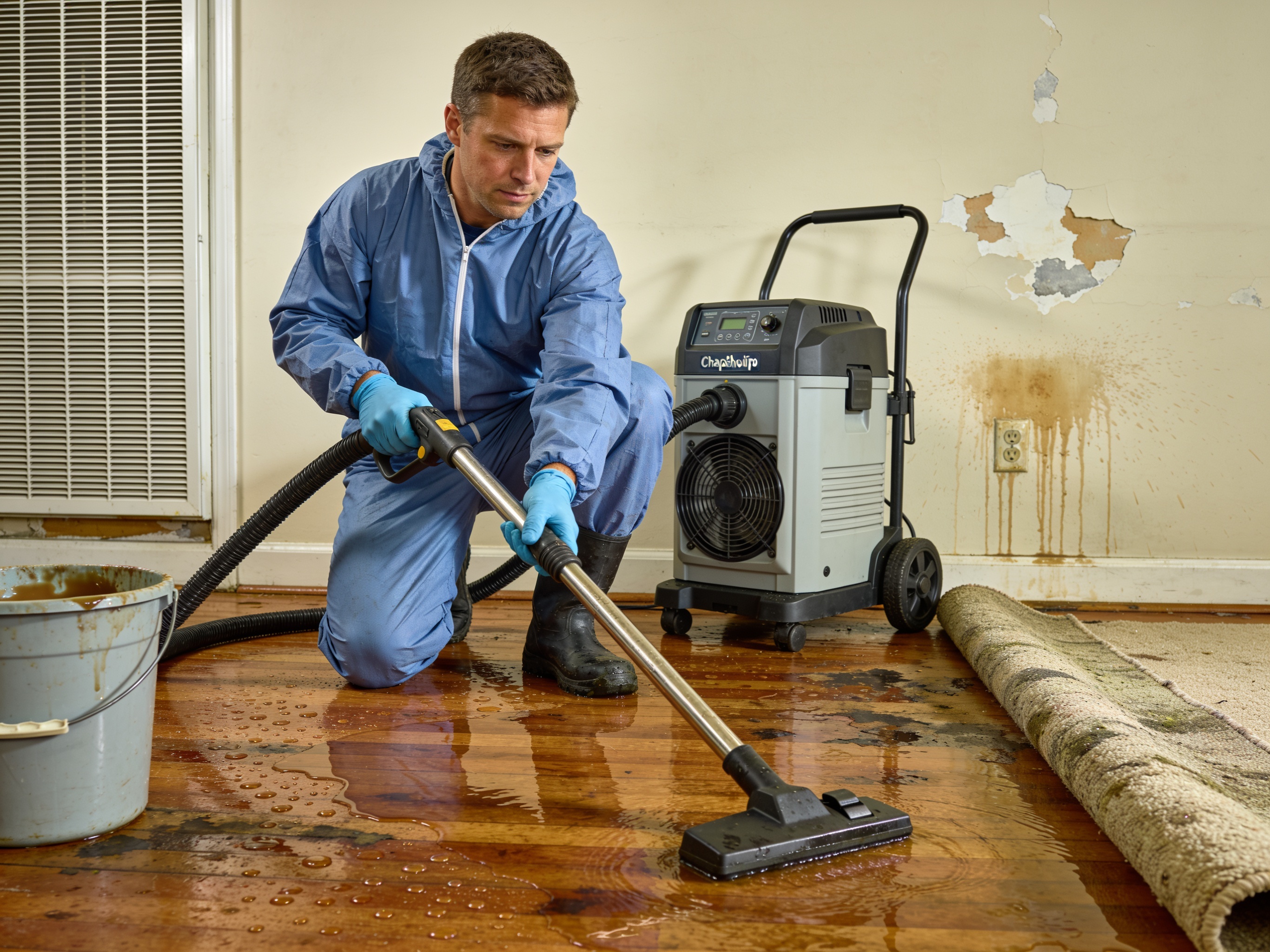
Chesapeake's humid subtropical climate brings hot summers that accelerate mold growth after leaks or flooding, especially in the older brick and frame homes built before 1980 that line streets in Great Bridge and South Norfolk. Technicians must pull baseboards and drill weep holes in drywall within the first 24 hours to prevent hidden saturation behind cabinets and in crawl spaces common to the area's raised foundations. Failure to account for the high water table near the Dismal Swamp Canal often leaves residual moisture that reappears weeks later during heavy rains.
Properties in Western Branch and Greenbrier sit on clay-heavy soils that hold water against foundation walls, turning minor roof leaks into full slab intrusions that require specialized moisture meters and negative air setups. Restoration crews routinely remove and replace saturated insulation in attics where summer heat drives condensation against older asphalt shingles. Work in these neighborhoods also involves coordinating with Chesapeake City permitting rules for any electrical or plumbing tie-ins exposed during drying.
Nearby Virginia Beach and Norfolk storm patterns frequently push water across the city line into Deep Creek basements, where sump pump failures during prolonged humidity spikes create the largest jobs. Crews use industrial dehumidifiers sized for 2,000-plus square foot footprints because smaller units cannot keep up with the moisture load from the surrounding wetlands. Every project ends with a final moisture map documented for the homeowner and any insurance adjuster.
Technician insight
In Chesapeake, the thing that catches most people out with water damage restoration is how quickly the humid summers turn a small leak into widespread mold behind baseboards in the older homes along the Dismal Swamp Canal corridor. Homeowners in Great Bridge often wait too long to pull carpet pads, thinking the clay soil will drain on its own.
Western Branch Basement After Heavy Rain
A homeowner in Western Branch noticed water rising in the finished basement after a summer storm. Inspection revealed saturated carpet pad and drywall from a failed sump pump and poor grading against the clay soil. Crews extracted water, removed affected materials, and ran drying equipment for five days until readings matched the rest of the house. The space was restored without mold growth.
Water Damage Restoration Services We Offer
✓Emergency Water Extraction
Rapid removal of standing water from basements and crawl spaces in Great Bridge and Deep Creek homes before mold sets in during humid summer weeks.
✓Structural Drying Services
Industrial air movers and dehumidifiers placed throughout affected rooms to pull moisture from drywall, subfloors, and framing in older Western Branch properties.
✓Mold Remediation After Water Damage
Containment and removal of mold colonies that develop quickly behind walls in South Norfolk and Greenbrier homes due to the area's persistent humidity.
✓Carpet and Flooring Restoration
Salvage or replacement of saturated carpet, hardwood, and laminate in living areas after leaks near the Dismal Swamp Canal or city park drainage ditches.
✓Drywall and Insulation Removal
Cutting out and disposing of water-soaked drywall and insulation to prevent hidden decay in attics and walls of pre-1990 Chesapeake City homes.
✓Crawl Space Water Damage Repair
Sealing vapor barriers and drying joists in raised foundations typical of Greenbrier and Deep Creek neighborhoods after heavy seasonal rains.
Water Damage Restoration Cost in Chesapeake, VA
| Service | Typical Range | What Affects It |
|---|---|---|
| Initial Moisture Assessment | $125–$225 | Varies by square footage in Great Bridge or Greenbrier homes |
| Emergency Water Extraction | $450–$950 | Depends on water volume and access in crawl spaces or basements |
| Full Structural Drying | $800–$2,200 | Influenced by humidity levels and home age in Western Branch |
| Drywall and Insulation Replacement | $1.80–$3.50 per sq ft | Includes disposal and basic finish work |
Ranges are typical for Chesapeake, VA and confirmed with an exact written quote before any work starts.
How it works
- 1
On-Site Assessment
Technician arrives at the Chesapeake address, maps moisture levels with meters, and identifies affected materials in neighborhoods like Great Bridge or Western Branch.
- 2
Water Extraction
Standing water is pumped out using truck-mounted equipment sized for local homes, followed by removal of saturated contents.
- 3
Drying and Dehumidification
Air movers and dehumidifiers run continuously while monitoring daily moisture readings until levels match unaffected areas.
- 4
Restoration and Repairs
Replacement of removed drywall, flooring, and insulation, with final walkthrough and documentation for the property owner.
Pricing
Upfront written quotes provided after inspection at your Chesapeake property.