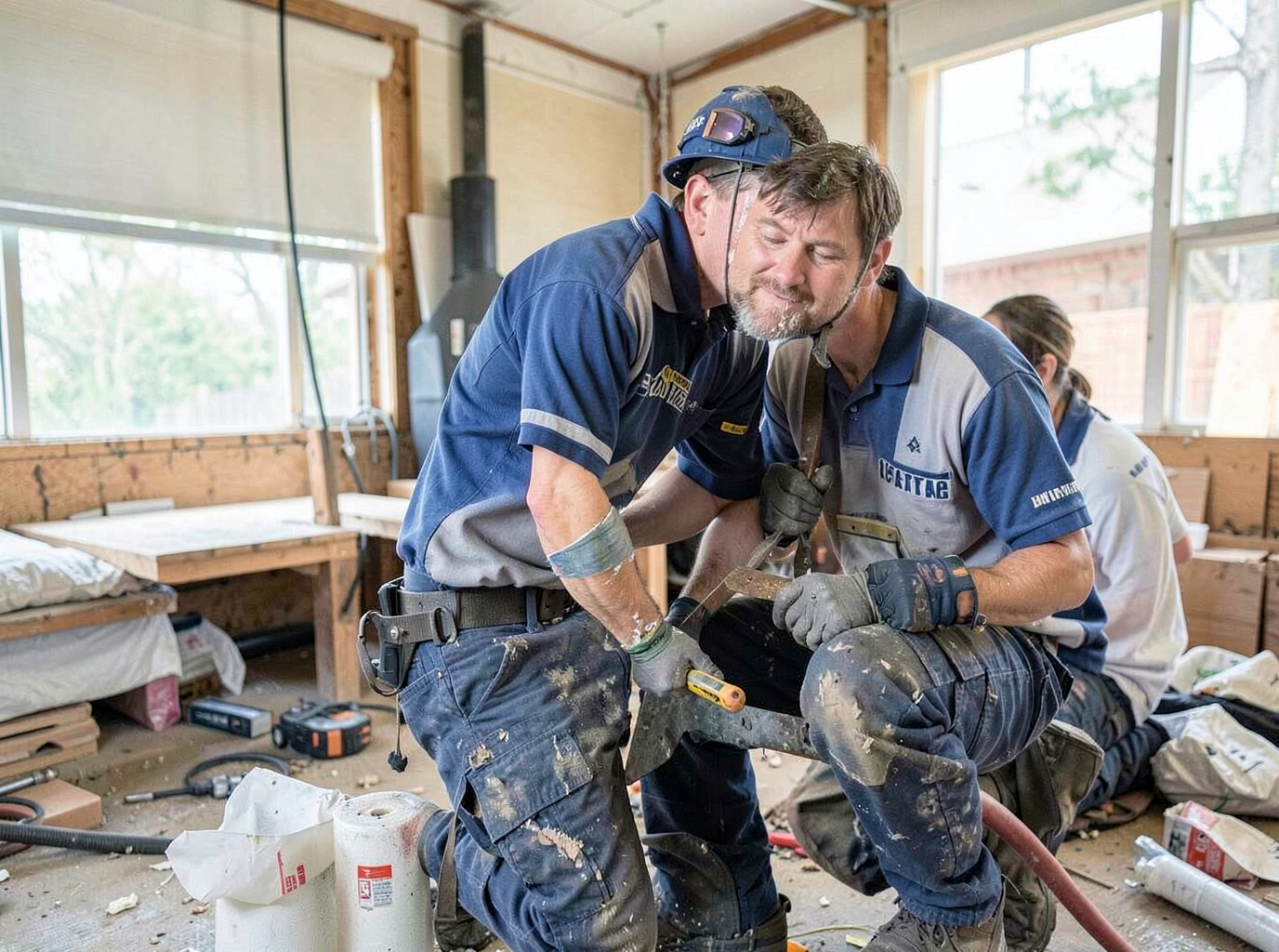
Seaford sits in Chesapeake City with a mix of single-story brick ranches and 1970s-1980s frame homes that sit close to the ground. Hot, humid summers push moisture into crawl spaces and older ductwork, so water damage restoration crews here focus on rapid drying before mold takes hold in the tight lots along Seaford Road and nearby streets. Crews from 1501 Technology Dr reach these blocks quickly via Battlefield Boulevard without crossing the high-traffic bridges that slow response from Norfolk or Virginia Beach.
Heavy summer storms and nor'easters push water toward the Dismal Swamp Canal and into yards that lack modern French drains. Western Branch and Deep Creek residents in Seaford often see water enter through garage slabs and HVAC closets after prolonged rain. Technicians extract standing water first, then use targeted dehumidification sized for the area's clay-heavy soil that holds moisture longer than the sandy lots found closer to Portsmouth.
Access to many Seaford properties runs through narrow driveways lined with mature trees, so equipment trailers stay compact. Restoration teams coordinate with Great Bridge and South Norfolk routes to avoid school traffic at nearby Crestwood Intermediate during weekday calls.
Around 33. Seaford
We regularly work near:
- 📍Dismal Swamp Canal
- 📍Great Bridge Battlefield
- 📍Chesapeake City Park
- 📍Battlefield Boulevard
Water Damage Restoration in 33. Seaford — Local Notes
- •Seaford's older crawl spaces often lack vapor barriers, letting humid air from the Dismal Swamp Canal condense on joists after summer storms.
- •Narrow lots near Great Bridge Battlefield limit equipment placement, requiring smaller portable extractors during water damage repair jobs.
- •Clay soil in Seaford holds water longer than neighborhoods in Greenbrier, extending drying times after heavy rain events common in the humid subtropical climate.
- •Many 1970s homes along Seaford Road have slab-on-grade garages that channel water toward finished living areas when drainage ditches overflow.