2026-11-12 · Robert Ellis
How To Dry Out A Flooded Basement After Heavy Rains In Chesapeake
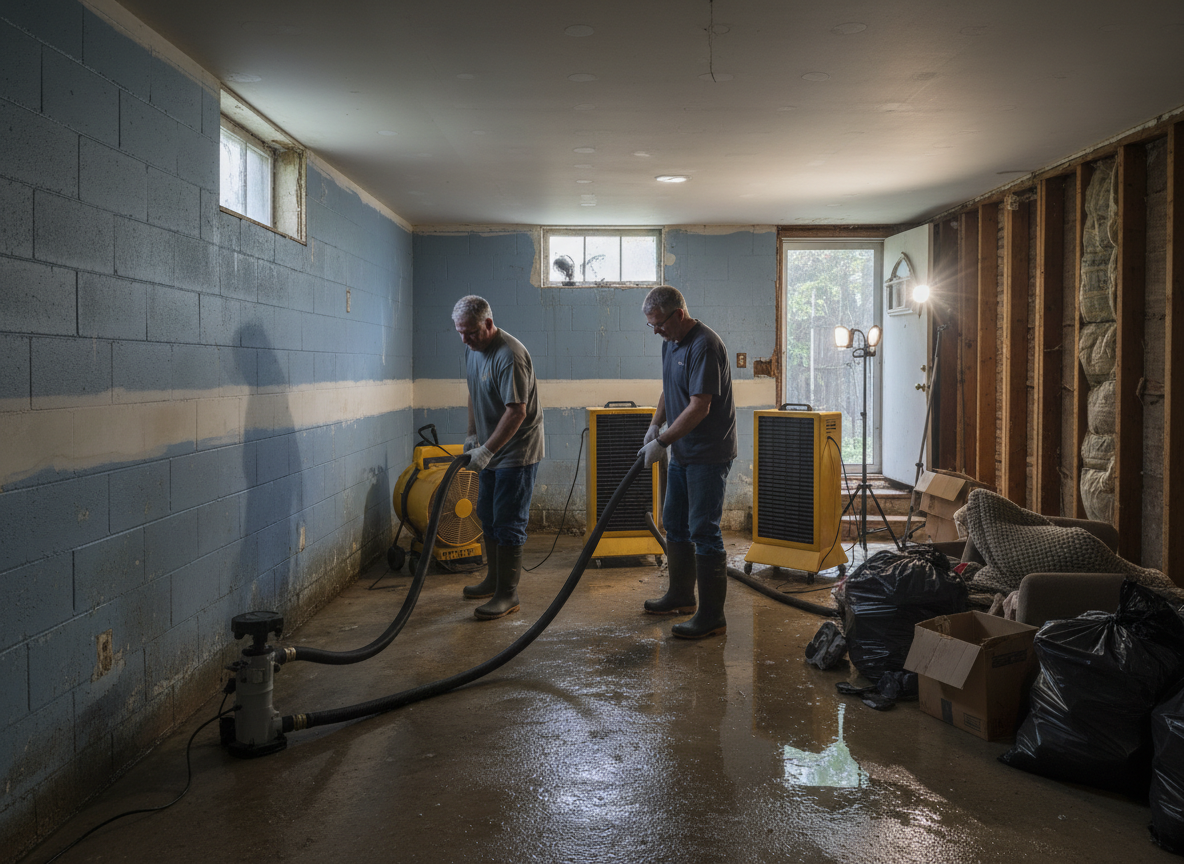
After heavy rains, begin drying a flooded basement in Chesapeake by extracting standing water within the first 24 hours, then running commercial dehumidifiers and air movers for 5-14 days until moisture readings drop below 15 percent, as the area's humid subtropical climate slows evaporation compared to drier regions.
Safety and Initial Assessment
Chesapeake basements in neighborhoods like South Norfolk and Great Bridge often sit on clay-heavy soils that hold water after storms, raising risks of electrical hazards and structural weakening in homes built before 1980. Shut off power at the main panel before entering, then check for gas leaks or sewage backup common near the Dismal Swamp Canal. Document water depth and affected materials with photos for insurance. Test walls and floors with a moisture meter at multiple points, noting that concrete slabs in Greenbrier homes can retain hidden moisture for weeks. Focus first on visible puddles and saturated carpet pads, which trap humidity and promote bacterial growth in the hot summer months typical here.
Removing Standing Water
Use a wet vac or submersible pump to clear water down to one-quarter inch depth, working from the lowest point outward to avoid spreading contaminants. In Western Branch and Deep Creek, where yards slope toward foundations, redirect exterior water with sandbags or temporary French drains before pumping. Dispose of extracted water into approved storm drains rather than sewers to comply with local rules. Repeat pumping every few hours as groundwater seeps back in, a frequent issue after prolonged rain near the Dismal Swamp Canal. Once standing water is gone, remove baseboards and drill small holes in drywall two inches above the floor line to allow airflow behind walls.
Drying Equipment and Techniques
Place dehumidifiers rated for at least 70 pints per day in the center of the space and position air movers at 45-degree angles along walls to create cross-ventilation. In Chesapeake's humid summers, run equipment continuously and monitor with a hygrometer, aiming for indoor humidity under 50 percent. Open windows only when outdoor air is drier than inside, which is rare during peak humidity seasons. For concrete floors common in older Great Bridge homes, apply moisture barriers after initial drying to block vapor transmission. Check progress daily with moisture meters on joists and subfloors; expect full drying to take longer in South Norfolk due to denser housing stock limiting airflow.
Preventing Secondary Damage
Apply antimicrobial solutions to exposed wood and concrete after drying to inhibit mold, especially in basements near Norfolk and Virginia Beach where spores travel easily. Replace insulation and drywall that stayed wet beyond 48 hours, as these materials in Portsmouth-adjacent areas often hide hidden rot. Improve grading around the foundation by adding six inches of soil slope away from the house, a common fix for homes in Greenbrier affected by seasonal rains. Recognizing Early Signs Of Water Damage In Older Chesapeake Homes helps spot recurring issues before the next storm. Seal cracks with hydraulic cement and consider installing a sump pump with battery backup for future events.
When Professional Help Is Needed
If moisture persists after seven days or mold covers more than 10 square feet, contact specialists for water damage restoration that includes thermal imaging and HEPA air scrubbing. Emergency water removal teams familiar with Chesapeake City handle the high water tables in Deep Creek faster than DIY methods. For homes in Great Bridge showing repeated flooding, water damage repair may involve exterior waterproofing that addresses the clay soils unique to this region. Track all equipment runtime and meter readings to support claims. This approach keeps basements dry through the humid summers while protecting the housing stock across Chesapeake neighborhoods.